
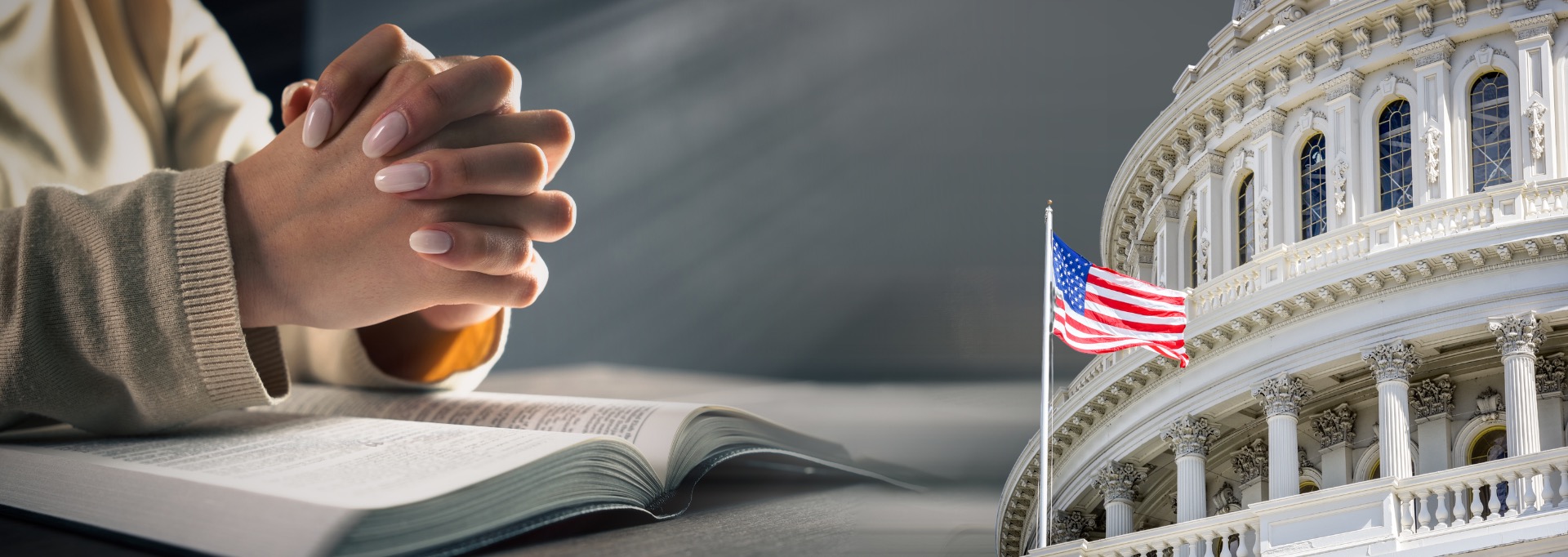
This is the unedited text of a sermon preached at St. Barnabas Church, Wilmington, Delaware on Sunday morning, June 21, 2020.
In the name of the Father, and of the Son, and of the Holy Spirit. Amen.
In a recent poll conducted by NBC News and the Wall Street Journal, people were asked the following question “When it comes to the country these days, do you generally feel that things are “out of control” or “under control.” Around 80% said that they thought the country was “out of control” and only 15% thought the country was “under control.”
How would you have answered? Does that 80% poll result reflect your own perception? Last Sunday at Coffee Hour I asked members of St. Barnabas if they felt the country was at war with itself and nearly all thought that it was so. That’s a worrying perception, and like many people, I have spent a long time sifting through the various news sources and public announcements and have tried to make sense of the situation. What exactly is going on?
There seem to be several threads to this story but the main one is the outrage at the killing of a man by a police officer. That was the trigger for a series of protests which have continued to this day. In response to these protests, what can we do? I would like to offer my own reflections and, for what it’s worth, suggest a step that we, as a nation, can take if we want to move forward. In making my reflection I claim one advantage, which is that I can see with the eyes of an outsider - I have lived here four and half years and became an American citizen only last year.
By the way, that day of becoming an American citizen was something I remember with pride. I was proud to belong to a country where people enjoy freedom of religion and freedom of speech. By living here I also began to understand the meaning of what people call the “American Dream.” That there were opportunities here which were not available in other countries - “the American Dream” is a dream of making something of yourself, of succeeding in your chosen field, and enjoying the material benefits that come with it.
This dream also has a spiritual dimension, but it comes in many different flavors and colors - Anglican, Catholic, Presbyterian, Baptist, Mormon - so if something isn’t quite to your taste, spiritually speaking, you can find something that is. America is so large and diverse that it is hard to say exactly what America is. I think it is a land of stories, of human stories, some bloody and some inspiring. All human history is a mixture of the bloody and the brave. And we all belong to one or the other, or both.
The American Dream seems to have gone into hiding lately. It has been locked down, like the rest of us, and doesn’t know if it is safe yet to come out. So where are we now? That is the question I keep asking myself. One of the main issues before us is race, or rather, racism. The recent disturbances have brought to the fore stories of discrimination and injustice; for many it has been an education and a revelation. It has brought to the fore some deep seated problems in our country, and so it is up to us to decide now, where do we go from here? In which direction are we headed? This is a complex problem with no easy answers. As you know, I sometimes offer a different view or a different angle to the mainstream, and that’s what I intend to do today.
First, let me tell you a little about my own experience before I came to America. I used to live in England, in a town called Luton, about fifty minutes by train north of London. I was priest-in-charge of the Church of the Holy Cross in Luton. The church was located in an estate called Marsh Farm, which consisted mainly of council housing - here it is called low income housing. Luton was once the hat making center of England - which is why its football team is called “the Hatters” - and later Vauxhall built a large car plant there and labor was brought over from the West Indies to work in the car plant. When I arrived most of the Vauxhall factory had shut down, but the people remained. The church had not had a priest for several years - I think the reason was that nobody wanted to go there - the estate of Marsh Farm had experienced deadly riots years before, and that sort of thing never happened much in England. There were major social problems - guns, drugs, lone mothers. Just the place then, where I would serve.
I loved this church, whose membership comprised around 50% white and 50% black. When I say “black”, that includes people from Sri Lanka as well as African-Caribbeans. On Sunday I would look at the congregation and think to myself, “well, this is what heaven must look like.” But in case you think it was too good to be true, I have to report also that on Sunday mornings most of the white people sat on one side of the church and most of the black people sat on the other side. They did this every week, and everyone just accepted it. Then one Sunday I played a trick on them: as they entered the church, the ushers gave each person a piece of paper, and on that paper there was either a red or a blue dot. Then, just as the service was about to start, I asked people to look at their piece of paper - those with a red dot were to sit on one side, and those with a blue dot would sit on the other side. Everyone obeyed the priest’s instruction and the pews were properly mixed, black and white together. How delightful, I thought, until we got the Peace. After that, everyone went back to their usual seats.
Oddly enough, at our social events there was less voluntary segregation and more integration. I grew to love all the people there, but that was not because I thought of them as being all the same - no, what I loved about them was that they were all different. Everyone had their own story but at church our stories would converge into one: the story of salvation. All people of every color need to hear the words of Jesus Christ, our Lord and Savior. In Jesus God speaks to all people because each one of us is made in the image of God and therefore, we are all sons and daughters of God by adoption.
Our adoption into God’s family places certain demands upon us, and high up on the list is the command to love our neighbor. By the way, this isn’t a request, or an optional extra, but a command - it forms part of God’s law. So whether we feel like it or not, God has commanded us to love our neighbor. If we find that hard to do, then we must ask God for help.
The third century bishop of Carthage, St. Cyprian, provided an aspirational list of personal qualities we are to cultivate as a child of God: he said, “It means humility in conduct, steadfastness in faith, modesty in speech, justice in actions, mercy in deeds, and discipline in morals; it is to be incapable of doing wrong to anyone and to bear patiently wrong done to us, to keep peace with the brethren [and] to love God with one’s whole heart.”
That’s an imposing list but it reminds us that Christianity places demands upon us, mostly at the personal level. Christianity as a movement focuses on converting the heart of the penitent sinner rather than in overturning political systems. That’s an important distinction for us to keep in mind when we ask, what is the Church’s role in the current crisis? The Church is an agent of reconciliation, and she seeks not the way of division but the way of unity. So, it is clear that in our divided society, the Church has an important role to play in bringing people together and promoting understanding and reconciliation.
Where do we start? The longer you look at the problem, the more intractable it seems. There is more involved here than simply addressing the sin of racism. There are social issues concerning politics, policing, crime, education, and economic opportunity. Any solution which focuses solely on one component while ignoring the others will leave the larger problem unsolved. It seems an impossible task.
As I turn the problem over in my mind, I think back to other so-called “intractable” problems in recent world history. The first of these was the division between Catholics and Protestants in Northern Ireland. This was a period of over 25 years where thousands were murdered. At the time, it seemed that there was no hope of peace, no hope of an end to the killing: the two sides hated each other with a passion, and the hatred was fueled by grievances which history had provided them. In a way, they were prisoners of the past, trapped in a never-ending cycle of violence which both sides justified by drawing upon past injustices.
And yet, to everyone’s amazement, the killing stopped. The two sides came together and worked out their differences under the Good Friday Agreement. There was a lot of political horse-trading, but the end result was that the armed conflict was over.
I lived in England during this time so I remember this era well. I remember praying each Sunday in church for an end to the Troubles. I know a lot of people committed themselves to prayer that God would find a way to end the violence. That’s all you can do in the face of an intractable problem like Northern Ireland. You pray about it to God. When you feel helpless, God is your last resort. Thankfully our prayers were answered, and even the most hardened terrorists came to the table and became part of the negotiated settlement.
The second “intractable” problem was South Africa following apartheid. What to do about the injustices of the past, especially the treatment of black people by the white regime? This had the potential to poison the well of political and social life for decades to come. The government established a Truth and Reconciliation Commission to hear the confessions of those who perpetrated the injustices, and to find a way through, which was based on truth and forgiveness. This can’t have been the easy route, because the memory of beatings and killings were still fresh in the minds of many, and yet it was the road taken. The head of the Commission was Archbishop Desmond Tutu, who applied Christian principles to the practice of the Commission. He proposed a threefold approach: the first being confession, with those responsible for human rights abuses fully disclosing their activities, the second being forgiveness in the form of a legal amnesty from prosecution, and the third being restitution, with the perpetrators making amends to their victims.
The Commission helped South Africa to establish itself as a relatively stable democracy, and set the future course of the country.
The situation here in the United States is different to Northern Ireland and South Africa, but there are some lessons we can learn from the experiences of the other two. The first is the need for prayer and for putting God at the heart of the situation. In particular, it is through following the example of Jesus Christ that we will find our true way forward. That means placing an emphasis on repentance, forgiveness, reconciliation and hope.
The second thing we can learn is that, in both Northern Ireland and South Africa, there was a desire to put the past behind them, to move forward, which meant having to adopt a more pragmatic approach, where the need for justice did not involve the submission of one group to another, and that if real progress were to be made it meant that all sides had to meet face to face. This was the real work, where sworn enemies sat across the table from each other and worked out a peaceful solution. There were no winners or losers. They met face to face and plotted a course for the future that left behind the bloodshed and the heartbreak.
This is why I think that the practice today, of one group kneeling before another, does not result in real progress - in fact it has the opposite effect; it may make some people feel good, but it makes other people feel angry. That is divisive in itself. It says that one group of people must submit to another, but that is the philosophy which led to our current situation. Two wrongs don’t make a right.
I wonder what my congregation in Luton would make of me if I were to do that to them, or to the leaders of the black churches I had contact with. I think they would have been embarrassed, and would have told me in no uncertain terms to stand up. They would want me to stand before them as a brother in Christ, a child of God, with the same fundamental desire to serve God and neighbor as them. This practice of kneeling I believe derives from Martin Luther King Jr; he and his followers knelt before God outside the courthouse. To my mind, that is the best example - if all of us were to kneel before God, rather than before each other, we would not see one group superior to another, but more of what we hold in common.
There’s no doubt that in recent weeks much of what was unknown has come to light - especially those who have been, and continue to be, victims of racism. However, the continued protests may be causing more harm than good, especially when certain groups exploit the protests for political gain, to promote causes such as the end of capitalism or the destruction of the traditional family unit. The Church itself must be careful it doesn’t identify with these extremists and undermine its own moral position. There will be no real progress if the movement for justice continues to target only white people. That’s not to say that white people shouldn’t bear the burden of guilt - I know that most of us do. But history tells us that this is not the way nations are healed, and it will be impossible to build a consensus this way. Maybe the anger is still too strong, but I sense a natural resistance building on all sides, which will only make things worse, not better. For the Church, the question remains, “how can we bring people together in a time of crisis?”
When we turn to the Bible we find in the First Book of Samuel a call to the nation of Israel to repent. From chapter 7, verse 3, it says “Direct your heart to the Lord, and he will deliver you…so the people gathered, and drew water and poured it out before the Lord. They fasted that day, and said, ‘we have sinned against the Lord.’” Now imagine if our nation were to do the same? Imagine a national day of repentance? What a witness to the world that would be! Let all of us admit to God that we have fallen short, and confess our need for forgiveness and healing as a nation. And if we all kneel together, we can begin to feel not the divisions, grievances, hurts and resentments which divide us, but the common ground of our own humanity, a nation of many races under one God.
Let me be clear: the way ahead is difficult, and my suggestion is not the solution to the problem, but a beginning. Because when the protests have died down and the people go back to their homes, there remains the day to day business of living: of finding and keeping a job, of raising children and contributing something to the world around you. But first, let us find our way forward through the offering of repentance. I am a small fish in a small pond, so it’s unlikely anyone will pay me much attention, but I’m surprised that none of our religious leaders have suggested such a course of action. I think it would be a start, and we should start as we mean to go on.
Like so many of you, I continue to pray for a peaceful and just outcome to our current crisis. I pray for the country which is now my home, and which I love. I pray for victims of racism, and also for those whose communities have been harmed during the riots. I pray for leaders who can bring peace and reconciliation and take us forward in unity, rather than find reasons why not to. There is always a reason and there is always a way. Now we need people of vision who can lead us through the smoking ruins of our past and present onto a future where we stand as one Nation under God, indivisible, with liberty and justice for all.
In the name of the Father, and of the Son, and of the Holy Spirit. Amen.
Father David Beresford
0 Comments
There are no comments.
Stay Tuned
Sign-up for David's newsletter